The Pharmacy Service Platform Built for Better Clinical Care
MAPflow brings guided assessments, automated documentation, patient follow-up, billing support, and instant performance reporting into one connected workflow for Canadian pharmacy teams.
1. What Is a Pharmacy Service Platform?
A pharmacy service platform is the operating system for a pharmacy’s clinical work. It gives the team one place to guide an assessment, record the pharmacist’s decision, produce the required documents, involve the patient, support billing, and understand how the service is performing.
That connected approach matters because clinical services rarely fail for lack of professional knowledge. More often, growth stalls in the gaps between systems: patient information is entered twice, a note is finished after the consultation, a follow-up sits on a paper list, or the owner waits until month-end to learn whether a service is growing.
One workflow, not another disconnected tool
MAPflow connects the clinical encounter with the work around it. Patient intake, guided decision support, province-specific documentation, communication, follow-up, billing information, and reporting all contribute to the same service record.
MAPflow is purpose-built for Canadian community pharmacy. It is a cloud-based clinical decision support and documentation platform that works on a desktop, laptop, or iPad. There is nothing to download, and role-based access lets each team member contribute at the appropriate point in the workflow.
2. Deliver More Clinical Services with Confidence
Expanded scope has created more opportunities for pharmacists to assess, prescribe, monitor, and prevent illness. It has also created a practical challenge: every new service brings its own eligibility criteria, clinical questions, red flags, treatment options, documentation rules, and billing requirements.
MAPflow turns that complexity into a repeatable care pathway. Evidence-based algorithms guide the pharmacist through a structured assessment while leaving the clinical decision where it belongs, with the pharmacist. Prompts help collect the relevant history, identify exclusions and referral criteria, and consider an individualized care plan.
Clinical services supported in the same environment
- Minor ailment prescribing: dynamic assessments built around the Pharmacists’ Patient Care Process, with province-specific pathways and documentation.
- Over-the-counter consultations: structured support for assessing symptoms, selecting appropriate self-care, and documenting recommendations.
- Chronic disease management: consistent clinical workflows that support ongoing assessment, intervention, and follow-up.
- Preventative care: a foundation for services that identify risk, support prevention, and keep patients engaged between visits.
- Prescription renewals: a guided, auditable process for collecting the information needed to assess continuity of therapy. See MAPflow’s prescription renewal workflow.
- Emerging pharmacy services: MAPflow continues to expand its service pathways as pharmacist scope and patient needs evolve. Our travel health consultation guide explores one important growth area.
The result is not simply a faster form. It is a standardized approach that helps an experienced pharmacist work efficiently, gives a newer clinician a dependable structure, and helps a pharmacy group deliver a more consistent standard of care across locations.
3. Connect the Entire Patient Workflow
A useful pharmacy service platform should reduce the administrative work before and after the clinical decision. It should not add another screen during the consultation. MAPflow connects the patient, pharmacy team, pharmacist, and pharmacy systems across the care journey.
Before the consultation: delegate intake
Send the patient a secure link by email or SMS so they can enter demographic details at their convenience. Patient-directed intake can take less than two minutes and gives the pharmacy team a cleaner starting point while reducing repetitive data entry at the counter.
During the consultation: guide and document
The pharmacist follows a dynamic pathway matched to the service and jurisdiction. MAPflow automates the resulting documentation, including the pharmacy assessment record, patient report, prescription, and primary care provider notification when applicable. Province-specific workflows, drug coverage details, and billing PINs help the team complete the service correctly the first time.
After the consultation: communicate and follow up
Secure eFax helps send prescriptions and provider communications without leaving the workflow. When follow-up is needed, MAPflow can send the patient a secure questionnaire on the appropriate date. Responses are recorded automatically; answers that may require attention are flagged so the pharmacist can focus on the patients who need clinical review.
Across your systems: reduce duplicate entry
MAPflow integrates with pharmacy and workflow technology, including pharmacy management systems. Depending on the integration, relevant patient details, assessments, prescriptions, and billing information can move between platforms. That means less copying, fewer opportunities for transcription errors, and more time for patient care.
4. Turn Every Service into Instant Reporting
When clinical work happens in separate forms, inboxes, and spreadsheets, pharmacy leaders are forced to manage by anecdote. A connected pharmacy service platform turns each completed service into structured, usable data, without asking the team to prepare a second report.
MAPflow’s pharmacy dashboard provides an up-to-date view of key performance indicators such as services delivered, conditions assessed, clinical workflow activity, practitioner performance, and revenue metrics. Owners and managers can see what is happening now, compare performance over time, and identify where a workflow needs support.
Questions instant pharmacy reporting can answer
- How many clinical services did the pharmacy deliver this week or month?
- Which service types and conditions account for the most activity?
- Where are assessments being started but not completed?
- How is clinical service revenue changing over time?
- Which practitioners or locations may benefit from workflow support or coaching?
- Are new services producing enough demand and value to justify expansion?
This visibility supports better daily decisions. A manager can recognize progress while it is happening, investigate a bottleneck before it becomes a monthly pattern, and set growth goals using the pharmacy’s own data. MAPflow also offers FLOWsights for industry partners seeking actionable intelligence from anonymized utilization and outcomes data.
5. Add Incident Reporting and Continuous Quality Improvement
Clinical service performance and medication safety are different responsibilities, but both benefit from a culture of consistent documentation and learning. MAPflow’s optional pharmacy incident reporting platform gives teams an accessible way to record incidents and near misses, review patterns, and move from reporting to improvement.
Its CQI dashboard brings incident trends, contributing factors, heatmaps, and improvement opportunities into view. Instead of storing reports and revisiting them only for compliance, pharmacy leaders can use current safety data to identify risk windows, discuss system factors with the team, and track whether a change made a measurable difference.
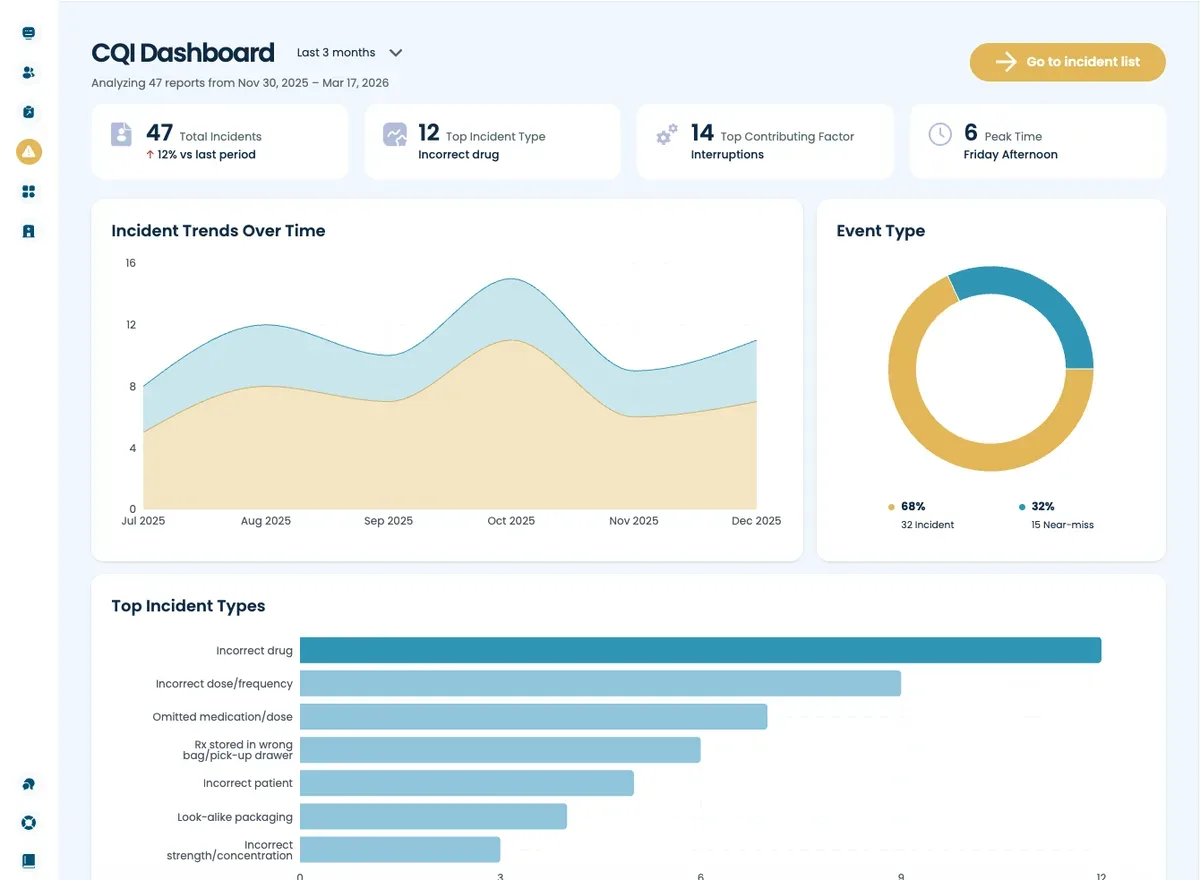
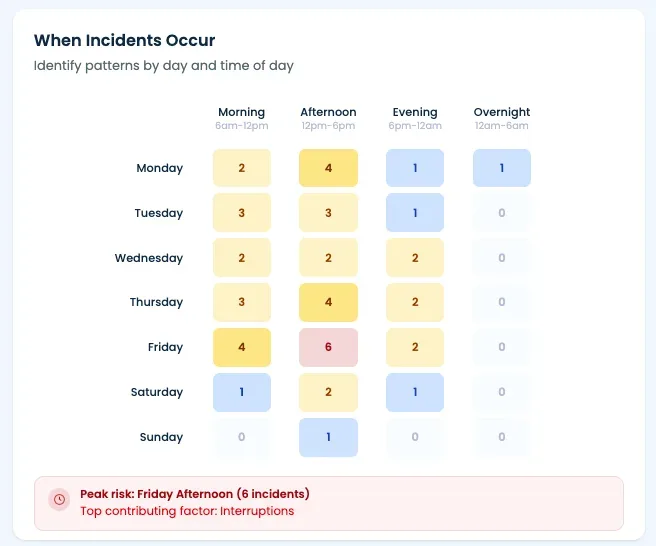
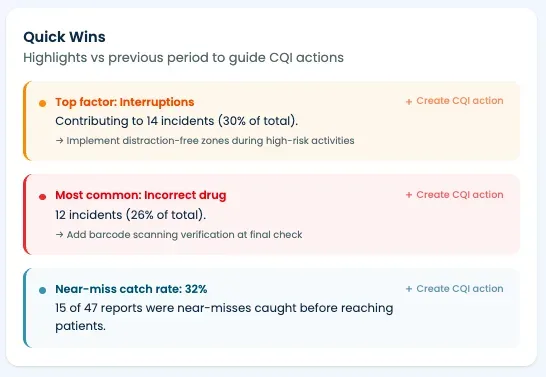
For Ontario and British Columbia pharmacies, MAPflow supports jurisdiction-specific incident reporting requirements. The platform also incorporates ISMP Canada’s Medication Safety Self-Assessment and supports regulatory reporting workflows where applicable. Pharmacy teams should always confirm the current requirements of their provincial regulator.
Clinical reporting and incident reporting are not the same thing
Clinical service reporting measures the care your team delivers and the operational results it creates. Incident reporting captures medication incidents and near misses for safety learning and regulatory compliance. MAPflow supports both, while keeping each workflow clear.
6. What to Look for in a Pharmacy Service Platform
The best platform is not the one with the longest feature list. It is the one your team can use consistently during a busy day, and trust with a real clinical encounter. When comparing pharmacy service software, look beyond the demo and ask how the platform performs across the full workflow.
- Clinical credibility: Are pathways evidence-based, written and reviewed by qualified experts, and updated as guidance changes? MAPflow publishes its clinical authors and reviewers.
- Canadian specificity: Does the platform account for provincial scope, documentation, coverage, and billing differences rather than applying one generic workflow nationally?
- Workflow completeness: Can it support intake, assessment, documents, provider communication, follow-up, and reporting? Or will the team still maintain parallel tools?
- Team participation: Can technicians and assistants contribute appropriately, with permissions that protect the pharmacist’s clinical role?
- Useful reporting: Does reporting update from the work itself, and can leaders act on the information without rebuilding it in a spreadsheet?
- Integration: Can the platform connect to the pharmacy systems and patient engagement tools already in use?
- Privacy and support: Is Canadian patient data protected appropriately, and can your team access onboarding, education, and responsive support?
MAPflow is trusted by thousands of Canadian pharmacy professionals because it was designed around the real work of pharmacy practice. It helps the team move from “we offer clinical services” to a more durable operating model: services are guided, documentation is completed, patients are followed, results are visible, and the workflow can improve over time.
Pharmacy Service Platform FAQs
See Your Clinical Service Workflow in MAPflow
Book a personalized demo to see guided assessments, automated documentation, patient follow-up, integrations, and live pharmacy reporting working together.